

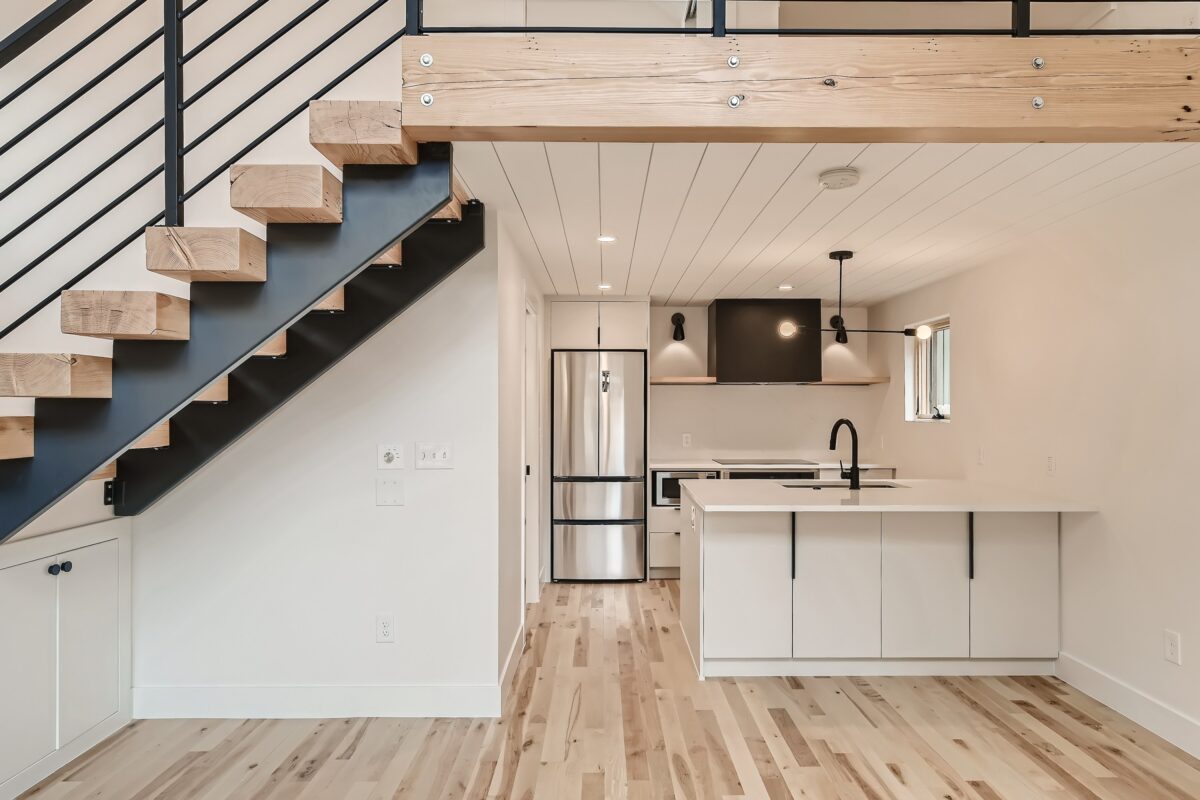
When homeowners begin thinking about adding an ADU to their property, the top considerations are typically layout, budget, and the overall function of the space. As an established ADU builder in Denver, we’ve learned that adding sustainability and efficiency to the list of priorities early on saves our clients money and minimizes their environmental impact in the long run.
By nature, ADUs have small footprints, which give them an advantage over larger custom homes when it comes to energy use and resource consumption. But building smaller doesn’t automatically mean building smarter. Simple decisions made during the design and construction process determine how efficiently a space performs over its lifetime.
Here are some of the most effective ways to build a more sustainable ADU, and why they’re worth considering from day one.
Prioritize a Tight, Well-Insulated Building Envelope
The envelope—meaning the walls, roof, windows, and foundation that separate conditioned space from the outdoors—has more influence on long-term energy performance than almost any other single factor.
A well-insulated, properly air-sealed ADU requires less energy to heat and cool, which reduces both utility costs and the size of the mechanical systems needed to keep the space comfortable. Because ADUs are smaller structures, even modest upgrades to insulation and air sealing tend to produce a noticeable impact relative to the size of the building. This is one of the areas where investing early pays off over the lifespan of the home.
Choose High-Efficiency Heating and Cooling Systems
ADUs are compact by design, which makes them well suited for efficient, right-sized mechanical systems. A popular choice for Denver ADUs are ductless mini-split heat pumps, which offer efficient heating and cooling without the space demands of traditional ductwork.
Because these systems are sized specifically for smaller square footage, they tend to perform more efficiently than oversized systems designed for larger homes. For homeowners focused on long-term operating costs, this is often one of the most impactful decisions in the entire build.
Incorporate Energy-Efficient Windows and Natural Light
Windows play a significant role in how efficiently a home performs. High-performance windows help regulate indoor temperatures, reducing strain on heating and cooling systems throughout the year.
Thoughtful window placement can also reduce the need for artificial lighting during the day. In our experience designing ADUs across Denver, where sunshine is ample, prioritizing natural light early in the design process results in spaces that save energy and feel more livable.
Choose Durable, Thoughtfully Sourced Materials
Materials that hold up well over time reduce the need for replacement and repair, which ultimately reduces waste and resource consumption over the life of the structure.
Durable siding, quality roofing, and finishes selected for long-term performance rather than short-term cost savings tend to serve homeowners better in the long run. Some homeowners also choose to prioritize materials with a smaller environmental footprint, such as flooring made from rapidly renewable materials (bamboo, cork, natural linoleum) or reclaimed wood and countertops made from recycled content.
But no matter the level of materials and finishes, not all ADUs are built the same. High-quality craftsmanship and precise installation allow quality products to withstand daily use and environmental elements, which impacts a structure’s longevity and sustainability. As an expert ADU builder in Denver, L&D Construction prioritizes meticulous attention to detail and precise execution throughout every phase of construction.
Plan for Water Efficiency, Inside and Out
For ADUs that include a kitchen and bathroom, water-saving fixtures, low-flow faucets, and energy-efficient appliances are simple additions that make a meaningful difference in overall resource use.
That thinking extends outside the ADU as well. Drought-tolerant, native landscaping around the structure reduces outdoor water demand considerably, an important consideration given Denver’s arid climate and current drought restrictions. Some homeowners take it a step further with a simple rainwater collection system, capturing runoff from the roof to use on garden beds or landscaping later in the season. This modest addition during construction can meaningfully cut down on outdoor water use over time.
Consider Solar Energy, Even If You’re Not Ready to Install Now
Not every homeowner is ready to invest in solar panels during initial construction, and that’s a reasonable position given budget considerations. But building an ADU with solar readiness in mind can make it significantly easier and more affordable to add solar down the road.
The good news is that this isn’t something homeowners need to figure out on their own. Denver’s building code already requires new detached ADUs and single-family homes to include a designated solar-ready zone, meaning the roof orientation, structural load capacity, and electrical infrastructure needed for a future solar installation are accounted for as a standard part of the build.
Building Sustainably Starts With Early Planning
The most sustainable ADUs are the result of seemingly small decisions made consistently throughout design and construction, from the building envelope and mechanical systems to the material finishes and integrated technology.
For homeowners in Denver, an ADU already represents an efficient way to add housing to an established neighborhood, making use of existing infrastructure rather than expanding the city’s footprint. Building an ADU with sustainability in mind extends that efficiency even further by creating a space that performs well for its occupants and for the environment over the long term.
To learn more about building a sustainable ADU in Denver, contact L&D Construction to schedule an introductory consultation.
