

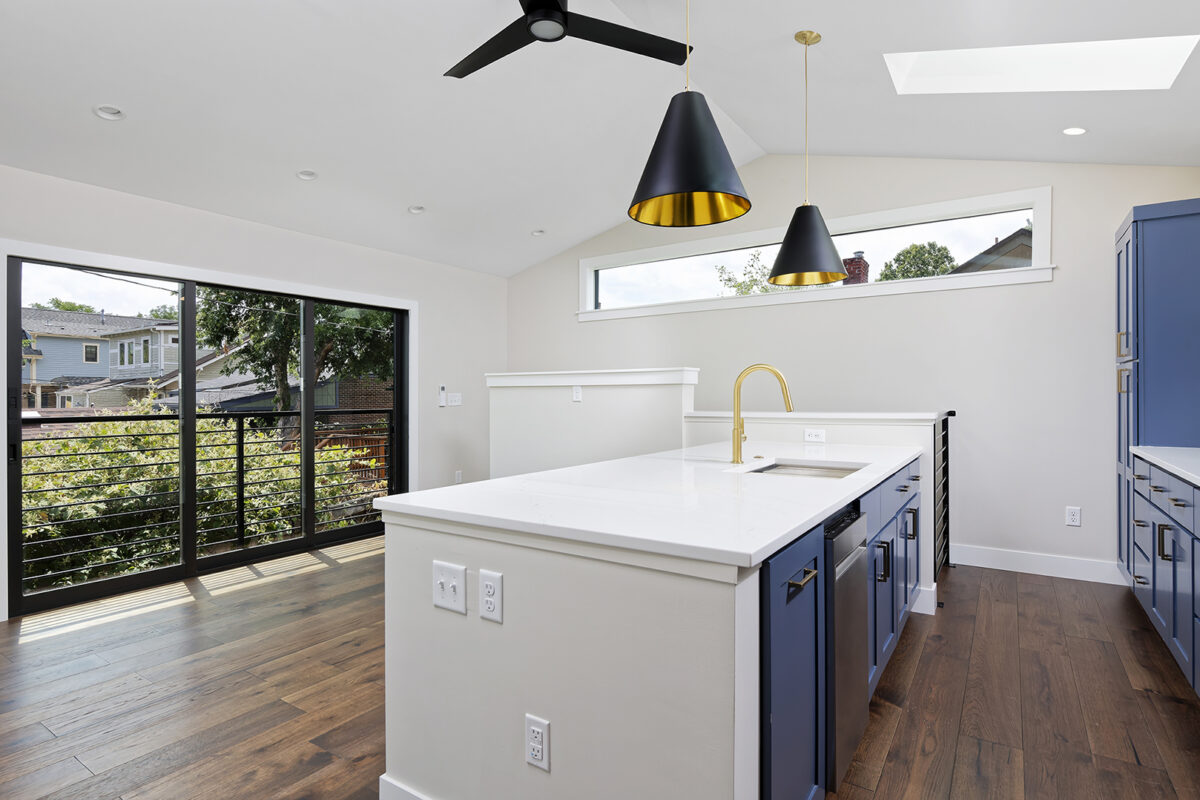
When looking back at the evolution of designing and building ADUs in Denver, it is remarkable how much has changed in just a few years. Back in 2016, when L&D Construction built its first accessory dwelling unit, many homeowner goals were difficult to achieve under Denver’s ADU zoning code. In many cases, height limits, bulk plane restrictions, and setback requirements restricted what was possible in a Denver ADU project, making it difficult to build functional space that met real family needs.
Projects like this Denver ADU began to reveal those gaps in a very tangible way. In many cases, it took real homeowners, real hardship, and real projects to show city officials where the code was falling short. These experiences ultimately helped pave the way for important ADU zoning reforms in Denver.
One L&D Construction project in particular stands out. This ADU entered the design phase in 2020, right as the world was beginning to shut down during COVID. The homeowners wanted to create living quarters for an aging parent who used a wheelchair, while also preserving space for a garden, chickens, and a multifunctional garage. It was a thoughtful plan centered on family, accessibility, and long-term use, but aligning that vision with the Denver ADU zoning code at the time proved to be a significant challenge.
To move the project forward, the homeowners took their case to the Board of Adjustment and sought a variance. The process was long, but the project was ultimately completed nearly three years later, at the end of 2022. Looking back, this is the kind of Denver ADU project that helped illustrate why zoning reform was needed. It showed how outdated standards could block practical housing solutions for multigenerational living.
Today, Denver ADU zoning rules and regulations are more flexible than they were just a few years ago. Builders and homeowners now have more opportunities to construct full two-story ADUs, work with updated setback requirements on smaller lots, and create more usable living space than was previously allowed. The zoning code can still feel restrictive, but when compared to earlier projects, the progress is clear.
When ADUs first began appearing in certain parts of Denver around 2010, many people were skeptical. Some worried about privacy, shading, and neighborhood character. There was concern that adding backyard homes would disrupt established blocks.
These concerns heavily influenced the design limitations that early Denver ADU builders had to navigate.
If you drive through Denver today and see an ADU with an unusual roofline, awkward massing, or a design that seems compromised, there is often a reason. In many cases, those design choices were driven by Denver zoning restrictions rather than by homeowner preference or builder creativity. Over time, as more accessory dwelling units were built, people began to see that ADUs can fit into neighborhoods without being intrusive. They also add gentle density and create more housing options in a city that needs them.
For homeowners considering an ADU in Denver today, the process is much more predictable than it once was. In many cases, the full timeline from design to permitting to construction can be completed in about a year. A typical schedule may include roughly three months for design, three months for city permitting, and six months for construction, depending on the site, zoning, and complexity of the project.
For ADU builders in Denver, these projects are about more than adding square footage. They are about helping families stay together, creating housing for aging parents, and finding smart ways to use urban lots more efficiently. The best Denver ADU projects often do more than solve a problem for one homeowner — they help shape better policy for the future.
